
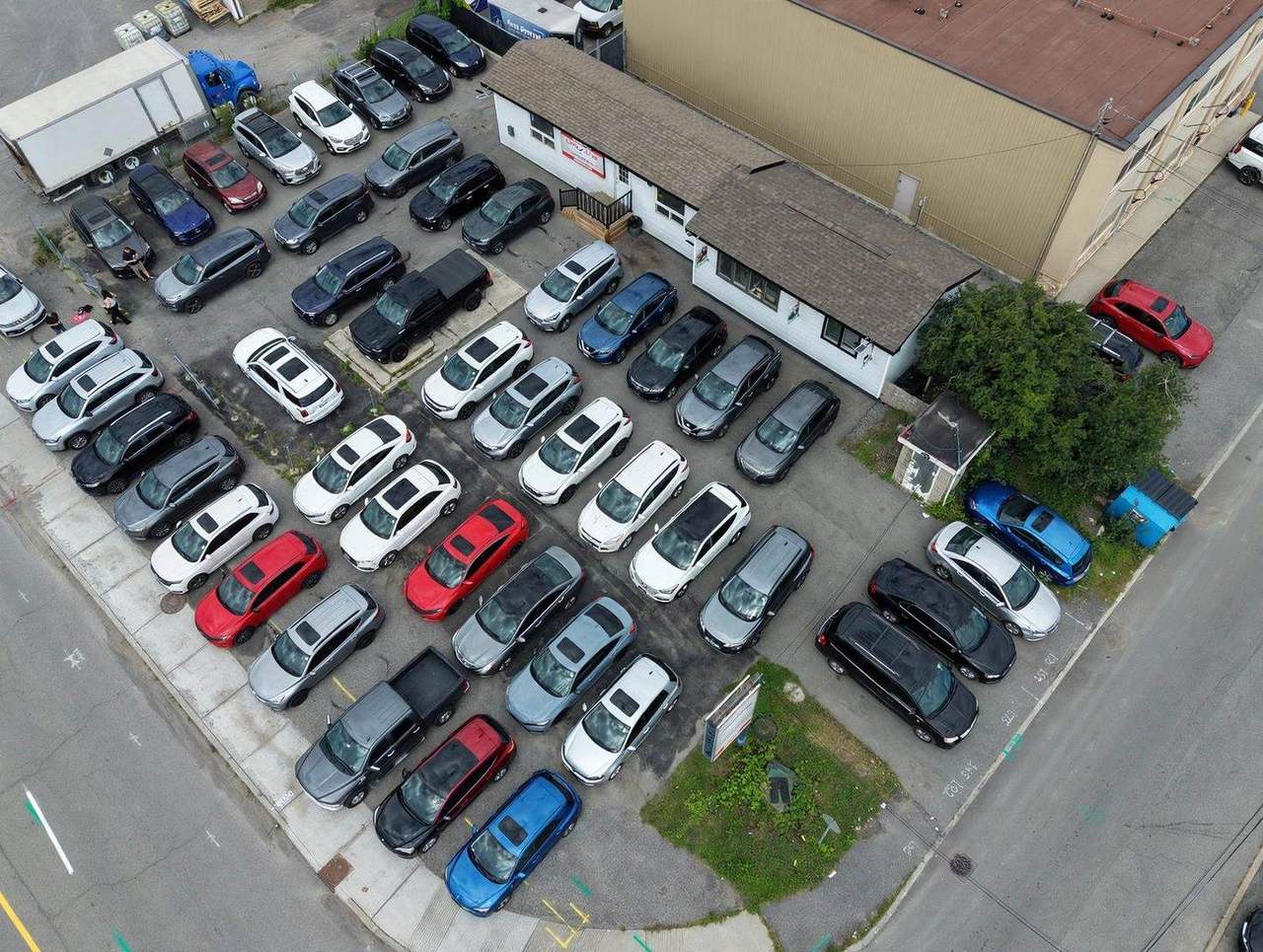
Your credit score is one number on the file — not the whole file.
If your score has taken some hits, you've probably seen the ads: guaranteed approval, everyone drives, your job is your credit. Here's the honest version from a dealership that does this every week in Ottawa: approval with bruised credit is genuinely possible — car loans are secured by the vehicle, which makes lenders more flexible than they are with credit cards — but nobody honest can guarantee it before a lender sees your file. What we can do is show you exactly what lenders look at, so you walk in knowing where you stand.
The short version
- "Bad credit" usually means a score under roughly 660 on Canada's 300–900 scale. There's no official minimum score for a car loan — every lender draws its own line.
- Lenders weigh five things: your credit history, your income and stability, whether the payment fits your budget, your down payment, and the car itself.
- One application at a dealership can reach a whole panel of lenders — banks and non-prime specialists — instead of you applying all over town.
- A car loan you pay on time is reported monthly and rebuilds your credit. For a lot of our customers, that's the real point of the loan.
- If anyone guarantees your approval before seeing your file, walk away.
What "bad credit" actually means
In Canada your score runs from 300 to 900, calculated by Equifax and TransUnion. Around 660 and up is generally prime territory — the range where banks offer their best rates. Below that, you haven't hit a wall; you've entered the range where lenders read the whole file instead of just the number. A bankruptcy or consumer proposal, a few missed payments during a rough year, high balances, or simply a thin file because you're new to credit — they all land differently, and lenders treat them differently.
Two things work in your favour on a car loan. First, the loan is secured: the car itself backs it, so the lender's risk is lower than on unsecured credit. Second, there's no single gatekeeper. Banks, credit unions, and lenders who specialize in non-prime files all set their own rules — which is why where you apply matters almost as much as what's on your file.
The five things lenders actually weigh
1. Your credit history — not just the score. Lenders look at the pattern: recent missed payments weigh more than old ones, and a file that's been clean for the last year tells a better story than the number alone.
2. Income and stability. Can you carry the payment? Steady income — and time at your job and address — reassures a lender more than almost anything else on a bruised file. Expect to show proof of income.
3. Whether the payment fits. Lenders compare the payment (plus your other debts) against your income. A smaller loan on a sensible car is an easier yes than stretching for the maximum.
4. Down payment. Money down — or a trade-in with value — reduces the lender's risk and your payment at the same time. It's the single lever you control most.
5. The car and the term. Newer, lower-kilometre cars are easier to finance over longer terms. An older car on a long term can be a decline even when the buyer is fine, because the loan would outlast the car.
How the application works at a dealership
You fill out one application and give consent for a credit check. The dealership sends that same file to its panel of lenders — in our case that includes major banks and lenders who specialize in rebuilding credit — and the approvals come back with real numbers: rate, term, payment, total cost of borrowing. You see the exact figures before you sign anything, and if they don't work for you, there's no obligation. One application, several lenders looking at it — that's the advantage over applying bank by bank yourself. Our bad-credit financing guide covers the documents and steps in more detail.
Before you apply: what improves your odds
- Know your score first. You can pull your own credit report free from Equifax and TransUnion. No surprises — and checking your own file doesn't affect your score.
- Bring proof of income. Recent pay stubs speed everything up and strengthen the file.
- Pick the payment before the car. Decide what monthly or bi-weekly payment fits your real budget, then browse what's on the lot with that number in mind.
- Put down what you can. Even a modest down payment or a trade-in changes how a lender sees the deal.
- Consider a co-signer if one's available. A stronger co-signer can pull a borderline file over the line.
- Don't shotgun applications. Applying at six places in a weekend doesn't improve your odds; it just adds inquiries. One application through a dealer's panel reaches more lenders anyway.
The part nobody leads with: this loan rebuilds your credit
A car loan from a lender that reports to the bureaus — ask, and make sure yours does — puts a payment on your file every month. Twelve months of on-time payments is one of the strongest signals you can send Equifax and TransUnion, and it's how a lot of people climb from the 500s back toward prime. The catch: it only works if the payment is comfortable. A loan you strain to carry, with a missed payment or two, sets you back further than where you started. The right bad-credit loan is the one that fits boringly well inside your budget.
Three lines to walk away from
"Guaranteed approval — no matter your credit." Nobody can promise that before a lender sees your file. If they do, the catch is coming later.
"Your job is your credit." A slogan, not a lending rule. Your income matters — it's one of the five things above — but it isn't the only thing.
Pressure to sign before you see the total cost of borrowing. In Ontario you get the full numbers in writing. If a seller rushes you past them, that's your answer about the seller.
How we do it at Lancaster
We finance all credit types, and the price on the windshield is the same whether you pay cash or finance — no games either way. Our financing page lays out the full picture in plain terms: rates from 6.95% to 31.99% and terms from 12 to 96 months, on approved credit, with your exact rate and total cost of borrowing shown before you sign. Every car we sell is safety certified, comes with a 6-month / 6,000 km powertrain warranty included, and includes a free CARFAX Canada report. And if the numbers come back and don't work for you, there's no pressure from us — we'd rather you come back when they do.
Questions we hear at the lot
Can I get a car loan after a bankruptcy or consumer proposal?
Often, yes — once you're discharged, lenders who specialize in rebuilding credit will look at your file, and your income, stability, and down payment matter more than the event itself. It isn't guaranteed, and the rate will reflect the risk, but a discharged bankruptcy is not a lifetime ban from car loans.
How much down payment do I need with bad credit?
There's no fixed rule — some files are approved with little or nothing down, and a trade-in counts. But every dollar down lowers your payment and the lender's risk, so it genuinely improves both your odds and your terms.
Will applying hurt my credit score?
A lender credit check done with your consent is a hard inquiry and can nudge your score a few points. Checking your own report is free and doesn't affect it at all. One application through a dealership reaches a panel of lenders, which keeps the inquiries down compared to applying at several places yourself.
How fast will a car loan rebuild my credit?
Payments are reported monthly, and most people see meaningful movement after six to twelve months of paying on time, every time. There's no overnight fix — the rebuild is the steady part, and it's why the payment has to fit your budget from day one.
Tell us where your file stands and we'll tell you honestly what we'd send to the lenders — and what we'd expect back. Call 613-680-4171 or read the plain-terms version first.